Saturday, April 5, 2014
Italian Ways: Back - - In Paperback!
In August, 2013, I wrote a short review of Italian Ways: On and Off the Rails From Milan to Palermo, an excellent book on train travel by Tim Parks, a British expatriate in Italy.
If you missed the chance to enjoy Mr. Parks in Italian Ways in hardcover, fear not.
W.W. Norton and Company, Parks' publisher, has released Italian Ways in paperback. In fact, if you are traveling this spring or summer and need a great plane, train or bus read, the smaller format paperback might be an improvement on the hardcover. I was going to say "a great plane, train, bus or car read," but if you were barreling down the Interstate reading Italian Ways, that might not end well for all - - unless this is available as a book on tape.
The redesign for paperback has kept the delights of the hardcover. The vivid cover is the same as in the hardcover edition and the whimsical, yet accurate drawings by David Atkinson.
Sunday, March 9, 2014
East Side, West Side, Pizza All Around Town
In New York
City , we often come in on the West Side of town and soon end up on
the East Side .
The quality and quantity of pizza
in each neighborhood varies. Here’s the
latest information. . .
When we
travel on Mega Bus, the bus presently stops near the Fashion Institute of
Technology, at 28th
Street and 7th Avenue . This is in the heart of the Garment District
and just to the south of Penn Station.
So, there are a lot of places to eat, to restore the strength after the
ride from upstate. For example, if you
want a reliable brand, there is a Panera’s in the block between 28th
and 29th Streets.
For pizza
in this neighborhood, the best place I know so far is Rosa ’s
on the Long Island Railroad side of Penn Station. A person coming off the bus would walk north
on 7th Avenue
and head down the stairs or escalator to Penn Station. The slices at Rosa ’s
are large and not greasy.
If you are
going up to Times Square , the Sbarro Pizzerias
are reliable, but they are a chain. If
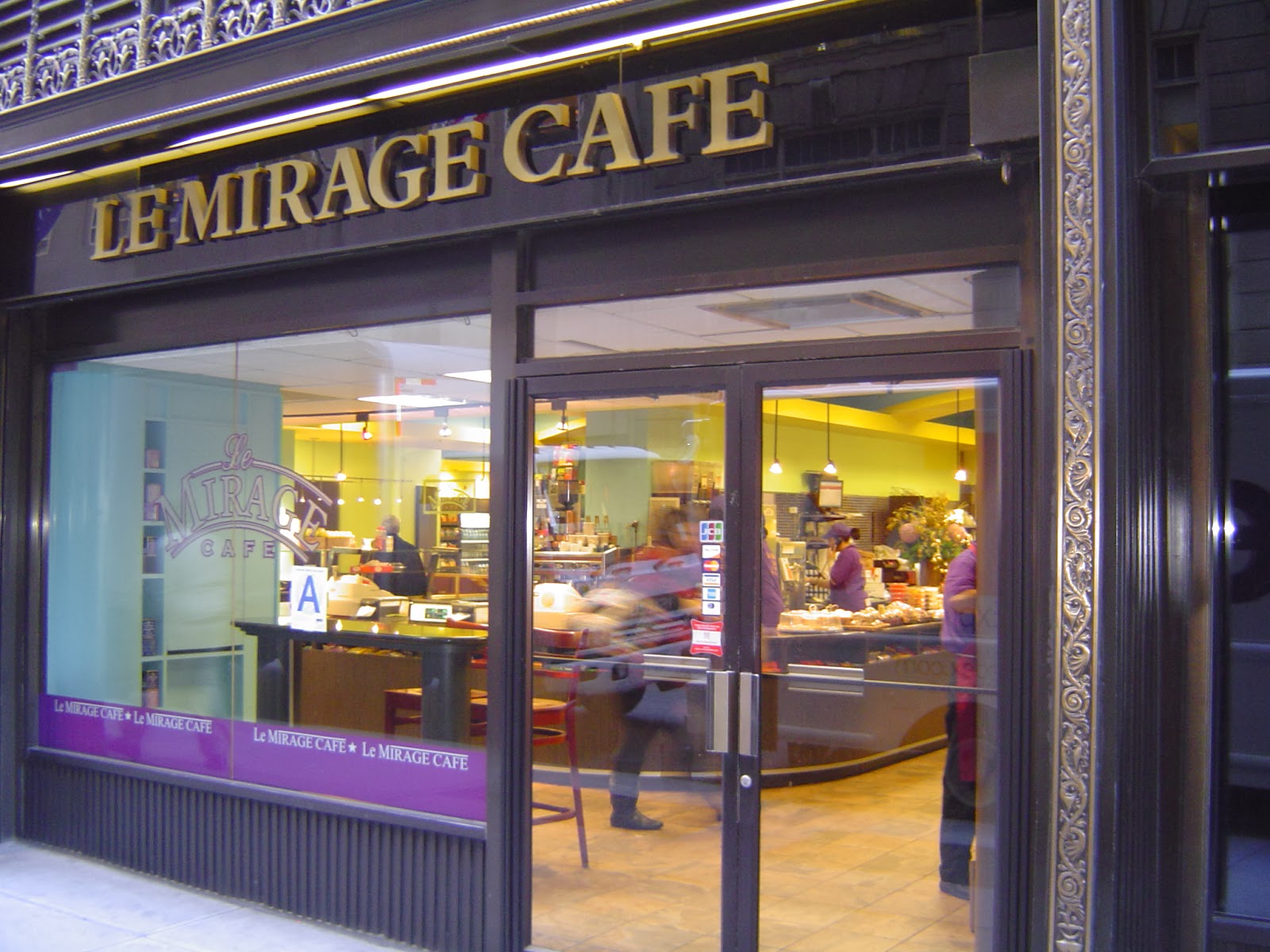
you have the time, it’s worth heading the Le Mirage, on 43rd Street between 5th
and 6th Avenues.
On the East Side , I discovered a new pizza place, Royal Pizza,
at Third Avenue
and 39th Street . Royal Pizza offers a two-fer. In addition to having great pizza at a
reasonable price - - they have seating in the back - - they are in an appealing
older building, which appears to date to the mid-nineteenth century. It is eerie to be sitting in this pizzeria in
a classic building, while just to the north almost every block has been
transformed by the construction of sleek office towers.
If you travel on the Hampton Jitney
and like pizza, Royal is a great location to keep in mind. It’s only a block or two south of the Jitney
stop on 40th Street . Presently, the restaurant on the corner by
the Jitney is closed, which makes knowing about Royal an added benefit for
hungry travelers.
On our last
few trips, we have left New York City
on Mega Bus. All Mega Bus trips now
depart from 34th Street
between 11th and 12th Avenues - - across the Street from
the Javitts Convention Center .
Compared to
Midtown or the East Side , this part of town has
few food choices. The McDonalds on the
corner of 34th and 10th
Street , has a capable staff, lots of room and will
get your food out quickly, if you are close to the deadline for lining up for
the Mega Bus.
The B&W Deli, two blocks east,
at 373 West 34th Street ,
serves a good slice and has a few chairs for eating in.
There is an appealing looking
restaurant/deli called the Market Place, a block west of B&W. If I had not already grabbed two slices at
B&W and was not pressed for time, I would have stopped in.
There are sure to be more trips to
the City, so stay tuned for more new food discoveries! If you are traveling through the City and find a good place, please send a post. It's always great to hear from readers!
Saturday, February 15, 2014
Looking Outward and Inward
![]() |
| George Bellows: Men of the Docks, Courtesy of the National Gallery, London, England |
Whatever the era, the traveler is always pulled between looking outward and in.
Until
recently, the printed page pulled people inward: commuters read the paper on
the 8 AM from Scarsdale
or people on ocean liners sat in steamer chairs and read novels.
The latest
pull inward is what Southwest’s flight attendants call “portable electronic
devices,” phones, computers, tablets and game consoles. At first these were regulated or tolerated. But now, transportation companies cater to
technology users. Mega Bus has free
wi-fi and for an allegedly small fee, Southwest and other airlines will let you
surf the web at 30,000 feet.
Sometime soon,
travelers may be pulled even more inward, if airlines allow in-flight phone
calls. After sitting behind someone on a
transcontinental flight in the 1980’s, who had more credit card points than
sense and had to call everyone and say nothing, I am as eager for in-flight
cell calls as I am for a rectal exam.
Sleeping and
reading are the two things that most often pull me away from watching the
journey.
On a recent
bus trip from Albany to eastern Long Island , after waking up from a short nap, I decided
to spend more time watching the trip.
The height of a bus offers a better view of the roadside than a
car. On the way home from Long Island, I
got to see a beautiful old house on Long Island . Driving by the same place in the car, the
view was obscured by a hedge.
During the
Megabus leg of the trip from Albany to Manhattan , streams, rivers
and ponds along the Thruway were locked in ice.
At other times of the years, these waters are open or moving, from the
current or wind. But nothing says winter
like white and cold-blue ice.
Later, thoughts
of Doctor Zhivago gave way to a
moment from Larry McMurtry and The Last
Picture Show. On the north side of
Interstate 80, in Bogota , New Jersey , just west of the New Jersey
Turnpike interchange, I saw a faded sign, painted on the side of a large
building, announcing the “Queen Anne Theater.”
The building was the right shape for a movie theater but no marquee was
visible from the expressway. The
building houses a dry cleaner; perhaps this business is enriched by spirits of
romance and adventure from when black and white movies were shown, instead of
starched shirts are boxed up.
The Queen
Anne theater observation shows something important about looking outward. The best view of building and sign are from
the eastbound lane. If you are going
west, the roadway is so low that the sign is not visible and it’s hard to see
the outline of the theater.
The main bus
entrance to Manhattan
is the Lincoln Tunnel. The highway comes
over the top of the Palisades , an ancient volcanic
ridge. As the bus comes through a cut in
the Palisades, travelers can see a delightful panorama of midtown Manhattan and New
York Harbor . From here, the Empire State
Building looks skinny, as
if it had competed in one of those events where people walk or run in
stairwells to the Building’s observation deck.
If you do
not look fast enough, you miss the view as the bus spirals down and into the
tunnel entrance.
Before
plunging into the tunnel this trip, I saw how Manhattan and the Harbor have remained
constant in an ever-changing metropolis.
Shipping
and docks in Hoboken
have been replaced by waterfront apartments.
On the West Side of Manhattan, a new generation of skyscrapers will soon
join the Freedom Tower .
At the turn
of the century and in the 1940’s, the painter George Bellows and photographer
Andreas Feininger captured white steam rising from steam locomotives, power
plants, cargo ships and ocean liners. Working
in oils and black-and-white, Bellows and Feininger each perfectly captured the
hard, sharp quality of winter light and the simple, stripped down colors in the
landscape.
![]() |
| Midtown Manhattan, 1946 by Andreas Feininger, courtesy of The Metropolitan Museum of Art |
Most of the
things that generated the steams in Bellows’ and Feininger’s times are gone,
replaced by other, more modern things.
If Bellows
and Feininger came back to the edge of the Palisades
today, they might mourn the departure of trains, cargo ships and ocean
liners. But they would be happy to see
that the City remain vital - - under the same hard, sharp light they saw.
Thursday, January 23, 2014
The Italian Pizza Kitchen: Washington, D.C.
You might not think that a transportation
conference would inspire great food. But
thanks to the Transportation Research Board’s 2014 Annual Meeting in Washington , DC ,
I found one of the best pizzas that I have tasted in the year to date.
My friend Bob and I needed a place to eat dinner
between two meetings. After learning a
reliable Irish pub near the convention had a long waiting list, we started
foraging.
On the west side of Connecticut Avenue ,
a few blocks south of the Smithsonian
National Zoological
Park , we found the
Italian Pizza Kitchen. The restaurant
was well-attended but not crowded. As
the interior photograph below shows, the dining room is intimate without
feeling jam packed. The furniture, paint scheme and decorations feel like Italy .
The Italian Pizza Kitchen has a
wide variety of appetizers, pizza slices, pizzas, salads, Paninis, sandwiches
and entries, all at reasonable prices.
The place definitely serves beer and wine and may serve mixed drinks.
Our waitress was capable and
attentive but not overbearing. Our meals
arrived quickly, which was appreciated with the deadline for the next meeting,
but were cooked just right.
Bob ordered a roasted eggplant pannini
and I ordered a personal pizza with sausage and green peppers as the toppings.
Both meals were tasty and
appealing. Bob said his panini "was very tasty and I really liked the bread." Although the personal pizza
is suggested as a meal for one, its six slices and 10 inch diameter means the
average eater may have a slice or two leftover.
But, that is what a doggy bag is for.
The pizza had a crust that was
thicker than the Neapolitan pizza favored in the New York
metropolitan area but thicker than a Chicago
or Sicilian pizza.
With this thickness, the crust was
crunchy on the bottom, not soggy on the top and was light and airy in between -
- like good Italian bread. The tomato
sauce nicely balanced sweet, savory and spicy.
Best of all, neither the crust nor the rest of the pizza was
greasy.
We dined at the newest of the Italian
Pizza Kitchen’s two locations: 2608 Connecticut Avenue, NW. But with
the capable, welcoming staff, comfortable décor and delicious food, the place
felt like it had been in business for generations, not the several years it has
been open.
Monday, December 30, 2013
The Best of 2013
Here is my list of the best of 2013:
1.
My readers.
Thanks to all who follow this blog.
Thanks, too, for your comments and suggestions. The night sounds and tastes of summer posts
were inspired by your comments as is item number 2, below.
2.
Burgers lost and found.
Our reader Carol was studying the Mormon migration from Illinois to Utah . On the trip, she had a burger in Hamilton, Illinois
and decided it was the best ever; it was, she reports, “the burger of dreams.” Since then, any burger she has had is measured
against the one she had in Illinois .
My favorite burger memories, my favorite
lost burgers, include the employee meals that Paul Hunting served at a Long
Island restaurant and burgers at O’Malley’s in East
Hampton .
While the restaurant
where Paul cooked has changed hands and O’Malley’s is closed, Café Max in
I thank my daughter and friend
Dennis for introducing me to In ‘n Out Burgers.
For under $6, you can get an excellent burger, fries that are crispy
without creepy additives and a medium drink.
For $2 more, you can get a chocolate shake better than any mousse,
brownie or chocolate cake.
3.
Le Mirage Restaurant. We first discovered Le Mirage on 43rd Street between 5th
and 6th Avenue
on a cold morning. The coffee,
breakfasts and lunches were a tonic against the wind chill factor.
We returned to Le Mirage on a wet summer day
and found its menu is also delightful during the warmer months. The place has an incredible variety of fresh
and appealing breakfast and lunch dishes.
They have omelettes, eggs on rolls, pizza, sandwiches, wraps and a
buffet.
We returned to Le Mirage on a wet summer day
and found its menu is also delightful during the warmer months. The place has an incredible variety of fresh
and appealing breakfast and lunch dishes.
They have omelettes, eggs on rolls, pizza, sandwiches, wraps and a
buffet. ![]() |
| Apple picking at Indian Ladder Farms, Voorheesville, NY. Photo courtesy of D. Holt |
![]() |
| A back country stream near Yosemite. Note the shirt from Tom Smith and how the shorts undo efforta to avoid the sun (photo courtesy of D. Greninger |
5.
The Eastern Sierras.
When Dennis and I returned to the mountains, trout were caught every
day. And . . . we enjoyed much good
food, scenery and history. Yosemite . My only regret: we were fishless on
lower Rush Creek , whose looks screamed “trout.” If Dennis couldn’t find a trout, they must
have all been traveling to Albany ,
going apple picking. Seymour helped me acquire trip provisions and
set up a pre-trip training table at Ernie Jr’s Mexican restaurant. Pasadena Casting Club friends offered
encouragement; Tom Smith provided an expedition shirt to screen out the
infernal high country sun.
enjoyed the Alabama Hills Café again and discovered new deli at the intersection where the road climbs the mountains to Yosemite.
![]() |
| The newly redone Tioga Gas Mart and Whoa Nellie Deli on the road to Yosemite |
6.
High Hook Wineries.
One of the nicest 2013 wine moments, that’s wine moment, not whine
moment, was meeting Mike Seymour and John Heus, High Hook’s proprietors. Mike and John are congenial and capable;
their wines are tasty. I hope to enjoy
more of them in 2014.
7.
Top of the Morning Café, Utica , New York . When a favorite restaurant closed, I needed a
breakfast place. I found Top of the
Morning Café north of the Utica Thruway exit.
The place is bright, the staff welcoming and the food is great. Readers who have stopped by liked the
place.
8. Pizza: In 2013, I got to end the year with a few slices of pizza from Prima Stella Pizzeria in Manorville, NY on eastern Long Island. Prima Stella has a thin crust pizza that is tops among pizza in the New York metropolitan area - - maybe even the nation.
Also in 2013, Mark's Pizza opened a new store in suburban Rochester. Mark's Pizza has a crust that is part way between thin crust and Sicilian. The restaurant cuts a slice that is generous in size, amount of cheese and toppings. Plus, the staff are capable and welcoming. There are several other Mark's in the Rochester area. If you plan to pass through the area, look this local restaurant up and save some time to stop in!
9. American Hustle. Okay, Okay. I know this is being written in 2014, but . . . our last event before the ball dropped in Times Square was to see the movie American Hustle. This movie is based, to some degree, on the ABSCAM sting that the FBI set up in the late 1970's to catch crooked politicians.
However, I think the director and screenwriter used ABSCAM as a starting point for a movie that felt like a big, flowing novel onscreen. Throughout the movie is a satisfying mix of drama, humor, exercise of raw power and countless plot twists.
Perhaps most noteworthy is the high quality of the performances. Jennifer Lawrence, Amy Adams, Christian Bale, Bradley Cooper and Louis C.K. do a masterful job of transforming themselves from A list celebrities into striving, conniving and often desperate hustlers from America's Garden State. This is a must see!
8. Pizza: In 2013, I got to end the year with a few slices of pizza from Prima Stella Pizzeria in Manorville, NY on eastern Long Island. Prima Stella has a thin crust pizza that is tops among pizza in the New York metropolitan area - - maybe even the nation.
Also in 2013, Mark's Pizza opened a new store in suburban Rochester. Mark's Pizza has a crust that is part way between thin crust and Sicilian. The restaurant cuts a slice that is generous in size, amount of cheese and toppings. Plus, the staff are capable and welcoming. There are several other Mark's in the Rochester area. If you plan to pass through the area, look this local restaurant up and save some time to stop in!
9. American Hustle. Okay, Okay. I know this is being written in 2014, but . . . our last event before the ball dropped in Times Square was to see the movie American Hustle. This movie is based, to some degree, on the ABSCAM sting that the FBI set up in the late 1970's to catch crooked politicians.
However, I think the director and screenwriter used ABSCAM as a starting point for a movie that felt like a big, flowing novel onscreen. Throughout the movie is a satisfying mix of drama, humor, exercise of raw power and countless plot twists.
Perhaps most noteworthy is the high quality of the performances. Jennifer Lawrence, Amy Adams, Christian Bale, Bradley Cooper and Louis C.K. do a masterful job of transforming themselves from A list celebrities into striving, conniving and often desperate hustlers from America's Garden State. This is a must see!
If you have any favorites of 2013, please leave a comment and share them with all of us!
Saturday, December 14, 2013
San Francisco Cuisine: Eat Your Heart Out
If you do not follow this advice, the appealing descriptions
of San Francisco cuisine and restaurants will cause you to go out and eat
something, perhaps a sandwich on sourdough bread, a seafood dish or a burrito inspired
by the Mission burritos made in San Francisco in the 1960’s and 70’s.
This well-written, comprehensive and well-organized book is
the second in the Big City Food Biographies Series, edited by Ken Albala and
published by Rowman and Littlefield. The
first book in this series is Elizabeth Williams’ New Orleans : A Food Biography. The publisher has just released New York: A Food Biography and has a Boston food biography in the works.
Although this book may be the first time many have heard of
Erica Peters, she is well suited to write about San Francisco food. This is her second book, her first is Appetites and Aspirations in Vietnam and
she is a director and cofounder of the Culinary Historians of NorthernCalifornia.
Peters is an excellent writer. She lets the material tell the story. She provides the narrative, sets the pace
with strong structure and then lets the people she met in her research tell the
story: celebrities such Mark Twain and Trader Vic or less familiar people such
as Abby Fisher, an African American woman who was renowned for her southern
cooking and wrote one of the first modern cookbooks in the region.
Peters has a formidable talent for organizing material. She covers the history of food in the region
from its earliest settlement up to the present day. To do this, she immersed herself in
anthropological and archaeological research, cookbooks, many hundreds of
newspaper articles, biographies and histories of every aspect of the economy,
society and ecology of the City on the Bay.
From here, Peters offers chapters on: food markets and
retailing; famous restaurants: San Francisco cookbooks; and signature dishes,
those recipes which people think of most when they think of San Francisco.
Americans take it for granted that fresh produce appears in markets
every day of the year. Peters suggests San Francisco was one of the first places in America where people realized California agriculture could supply fresh
and nutritious food year ‘round. This
realization occurred around the time of the Gold Rush in 1849 and would have been
a great relief to residents and miners who had to live on bland and doughy
foods.
Peters reports on her subject in a balanced manner. For example, she discusses the racism and
exclusion that nearly every ethnic group faced, when arriving with new
foods. But she also shows how the racism
was overcome and local society has moved forward.
I have been lucky to visit San Francisco and eat in some of the restaurants
that Peters describes. From personal experience,
her restaurant and food descriptions are exactly right. When she describes the City’s signature
dishes, it took me back to great meals in San
Francisco restaurants and homes, meals enjoyed with
long-time friends and family.
Sunday, November 24, 2013
How Do You Like Those Apples?
On the Atlantic side of America this
fall, we had a bumper crop of apples.
And in this bumper crop, one of my favorite moments was when my friend
Jack Brennan invited us to pick Golden Delicious apples at his house.
Jack and
his wife, Mary, live in a corner of New
York ’s Capital Region that is emphatically rural -
- despite the python-like pressure of
suburbs all around.
When we got
to Jack and Mary’s house, Jack, an author and delightful story-teller, told how
he became an orchardist. “When my
daughter, Mary Ann, was attending Cornell,” Jack said, “she took a course in
pomology - - how to grow apples.” “One
of her class assignments,” he continued, “was to graft a Golden Delicious onto
root stock.”
Mary Ann
brought home her graft of a Golden Delicious.
It was, Jack recalled, “about the length of a yardstick and the diameter
of a man’s thumb.” The Brennans planted
this sapling on the east side of their house, for the sun and shelter from the
area’s raw west winds.
Despite a
fragile beginning, 30 years later, the tree is over 40 feet high. At some point along the way, Jack thought,
“If one tree is good, then two must be better” and planted a companion, also a
Golden Delicious.
Over the
years, the harvest waxes and wanes. Jack
and Mary eat the apples raw, feed the most blemished ones to cattle in a
neighboring field and make applesauce with the rest. With a lot of elbow grease to core and peel
the apples and a recipe that his mother gave him, Jack sets up an apple sauce
assembly line for a week or so in October.
On the day
we visited, the sky was one of the brightest blue of all season and the
temperature was nearly perfect. Low-hanging
fruit was already applesauce in Jack’s freezer but many more apples were
available from for anyone willing to climb a ladder and catch apples in a long
pole cutter.
Jack does
not spray the trees. With spots and a
gray black scale on them, the apples look a bit scary. Neither, however, hurt people - - and neither
hurts the taste.
These
apples are like snow flakes in that none tastes exactly the same. Eating the apples is also like watching the
light reflect off a diamond’s facets.
One bite can be sweet, the next tart.
Often,
store-bought Golden Delicious apples are useless for baking. They are too sweet or get mushy too
soon. Jack’s apples stayed firm, right
into November. When my wife Dorothy made
the last portion of apple crisp with these apples, they had many brown spots
that needed to be removed but the fruit was still firm.
Although
the weather is colder than it was when we picked apples in October, the taste
of that apple crisp will remind us of the pleasant autumn senses almost to
Thanksgiving.
Saturday, November 2, 2013
Happy 100th LA Aqueduct! Seeing the LA Water System from the Road
![]() |
| Mammoth Mountain, on the west edge of the Owens River watershed |
While looking out the window on drives to and from the eastern Sierras, I enjoyed the vast landscape between
As the
drive went on, rolling by at highway speed, I started seeing glimpses of the
water system that hydrates LA.
Dennis has
been driving between LA and the eastern Sierras for decades and pointed out
aqueducts and reservoirs along the way.
Jane Galbraith, a public information office at the Los Angeles
Department of Water and Power (DWP), helped me decode the water system in the
landscape, as did information on the DWP website. One of the main things I learned is that much
of the system is visible from the car - - and more if you can get out and walk.
Much of
LA’s water supply is surface and well water from the several thousand square mile
Owens River watershed. The watershed’s western boundary includes:
Mount Whitney; eastern Yosemite
National Park and
numerous Sierra peaks over 10,000 feet high.
The Inyo Mountains on the eastern boundary have a
bristlecone pine that is the oldest tree in the world. The Inyos and the Whites form the start of
the basin and range country that stretches across Nevada
and into Utah .
From the
Owens valley, the DWP moves water nearly 400 miles south to LA, using the Owens River and an aqueduct system. The entire system is gravity fed, delivering
water regardless of whether or not the power is on.
Tuesday, November 5th, is the centennial of this system, whose
planning, design and construction was managed by William Mulholland, an Irish
immigrant who rose from ditch tender in 1878 to superintendent of the entire
system.
Mulholland
was a larger than life figure, so much so that when Roman Polanski conceived
the movie Chinatown ,
about water skullduggery in LA, he needed two characters to encompass
Mulholland. There was Hollis Mulwray,
the cerebral technocrat and brash, aggressive Noah Cross.
The Aqueduct: Route 395 crosses the LA Aqueduct in several
places, such as north of Haiwee Lake and south of the village of Independence . At these locations, you can see the water
rustling downstream to thirsty Angelenos.
When looking at the Aqueduct, you may reflect, as I did, that something
so small is serving so many people. Where
the Aqueduct is not directly visible from the road, you can see its right of
way on the hills to the west.
The Owens River : Parts of the Owens are a natural aqueduct moving
water to LA. With steady flow in this
part of the river, great trout fishing is available almost all year round.
![]() |
| Grant Lake, photograph courtesy of Tom Schweich |
Reservoirs: The water system has several large reservoirs
throughout the watershed. One of largest
is Grant Lake , near Lee Vining. Seeing the water level in this reservoir so
low was unsettling. Let’s hope for a
nice snowy, rainy season to fill it up.
Sluices and flow measuring gages: If you are on back roads and truck trails on
the slopes of the eastern Sierras, you will see small sluices, with ponds
behind them and antennae. You will also
see flow measuring gages on creeks and ditches, about the size of a garbage
can. The gages, part of the water system
nerve center, help DWP determine how much water there is and where it is coming
from.
Visitor’s Centers: At the InteragencyVisitor’s Center on Route 395, one mile south of the village of Lone Pine ,
you can get information about the Owens valley and the surrounding mountains from
DWP and Federal, State and local natural resource agencies. The MonoLake visitor’s center near Lee Vining has
information about efforts to restore lake and stream levels in the Lake and its watershed.
Seeing this
complex water system in the midst of such grand nature is fascinating in its
own right. The experience is also a
landscape-size example of the dance, delicate at times, lead-footed at others,
that people perform with the natural world.
Tuesday, October 22, 2013
I'm Not Done Yet
When it comes to autumn fishing and gardening, four words,
delusional in the face of the impending cold weather, define my outlook. Those words are, “I’m not done yet.”
The folly
of these words in the garden becomes quickly apparent. The late planted peas never got started and
tomatoes, even the prolific cherry tomatoes, are wasting away. The savior for home grown produce this week
are the cool weather crops, such as kale and chard.
With
fishing, the delusion that it will last forever is easier to maintain. The fishing right now is wonderful. Saltwater fish like striped bass are
migrating. Some trout and salmon are on
the move to spawn. Fish in general are
said to be feeding more aggressively now, to bulk up for the coming winter.
The fall
can be a great time to learn something new about fishing. My friend Seth is getting ready to take up
trout fishing from a kayak and that has started a conversation and research
that has expanded to include my friends Seymour and Phil.
During a
break at a recent meeting, my co-worker, Keith, told me about his favorite fly
fishing tackle: a three weight fly rod that is six and three-quarter inches
long. Keith likes this rig as it is
nimble enough for fishing the small streams he likes the most; the light weight
makes the fight of even the smallest fish, “feel like a tuna.”
If you are
not trying something new, there is much delight in the tried and true. My recent fishing has been saved by an elk
hair caddis pattern tyed by my friend Dennis.
It has also been saved by one of the Woolly Buggers that my friend
Barbara gave me, a tough, durable and beautifully tyed fly that her cousin
Steve gave her.
![]() |
| This brown trout took Steve's Woolly Bugger |
![]() |
| A California fishing trip saved by one of Dennis' flies |
One caution: If you are out in the next few weeks, be prepared for cooler weather and have a back-up wardrobe in case the weather gets even cooler or wetter. This past week, my waders sprung a leak while I was fishing Salmon Creek, a tributary to Cayuga lake in central
Angling
should be good to great on waters still and flowing on all three coasts. If you have a story you want to share, please
post - - or share it and I will update this blog!
Thursday, October 10, 2013
Founding Fathers Pub and Allen Town District in Buffalo: Photos courtesy of Founding Fathers Pub
We have had
great weather in upstate New York and it
extends as far west as Buffalo . The city is having its share of golden
afternoons, complete with red, orange and gold fall foliage.
One of the
neatest parts of Buffalo
is Allen Town, the Arts District. One of
the neatest eateries in the Arts District is Founding Fathers Pub on Edward Street , near
the intersection with Delaware
Avenue .
Michael
Driscoll, owner of the pub, is a retired social studies teacher, who tended bar
in college. Driscoll brings his love of
history, politics and geography - - and his bartender’s congeniality - - to this
appealing pub in a historic building that was a livery in the nineteenth
century. Fittingly, the place opened on
Election Day, 1985.
Inside, the
walls are covered with historical memorabilia and flags. It appears every President is represented
with a portrait or photograph. Driscoll
explained that he gets some of the flags when he travels but many people bring
in flags from far flung places, to add to the atmosphere.
Driscoll, his bartenders, waiters and waitresses are welcoming, as are the patrons. Early in the evening, people stop for a drink or dinner. Later on, college students come in. Both groups seem to co-exist, smoothly, and the place is pleasantly lively.
The menu is
reasonably priced, tasty and has fun items.
Free nachos and popcorn are available.
One of the appetizers is ground chicken meatballs, made with a local
brand of Buffalo sausage and coated with Buffalo chicken wing
sauce. Founding Fathers has a few pasta
dishes and a delicious variety of burgers and hot and cold sandwiches.
Both menu and website talk up a
fried bologna sandwich, but I am not yet adventurous enough to order it. Daily specials are noted on blackboards in
the dining room and in the bar.
A high point at Founding Fathers
is the monthly trivia game that Driscoll hosts on the first Tuesday of each
month. If you cannot attend the trivia
game and are sitting at the bar, Driscoll may toss off a trivia question or two. On a recent visit, he asked which President
was born in Illinois
- - and it was not Lincoln or Obama!
For patrons
who want more history, take time to walk in the neighborhood. On the corner of Edward and Delaware is the Mansion Hotel, a full
service hotel in an old mansion. A few
steps away to the east, on Franklin
Street , is a pavement-busting sycamore said to be
the oldest tree in Buffalo . Around the corner and north on Delaware is the Theodore
Roosevelt Inaugural Historic Site. A
short drive to the north is the Albright-Knox
Art Museum , which was collecting and
showing Picasso’s work at least a decade before the Museum
of Modern Art in New York City was even formed!
If you
can’t visit Founding Fathers Pub, or cannot return soon enough, please visit
their website. It has a cartoon of
George Washington crossing a river, possibly the Niagara
River , on a burger, great writing, pictures and the menu.
Subscribe to:
Posts (Atom)